Thai Government Challenges IFMA's Exclusive Authority Over Global Muay Thai
The Thai government has issued an official statement regarding the regulation and international development of Muay Thai, contesting the possibility of the International Federation of Muay Thai Associations (IFMA) exercising exclusive authority over the sport worldwide.
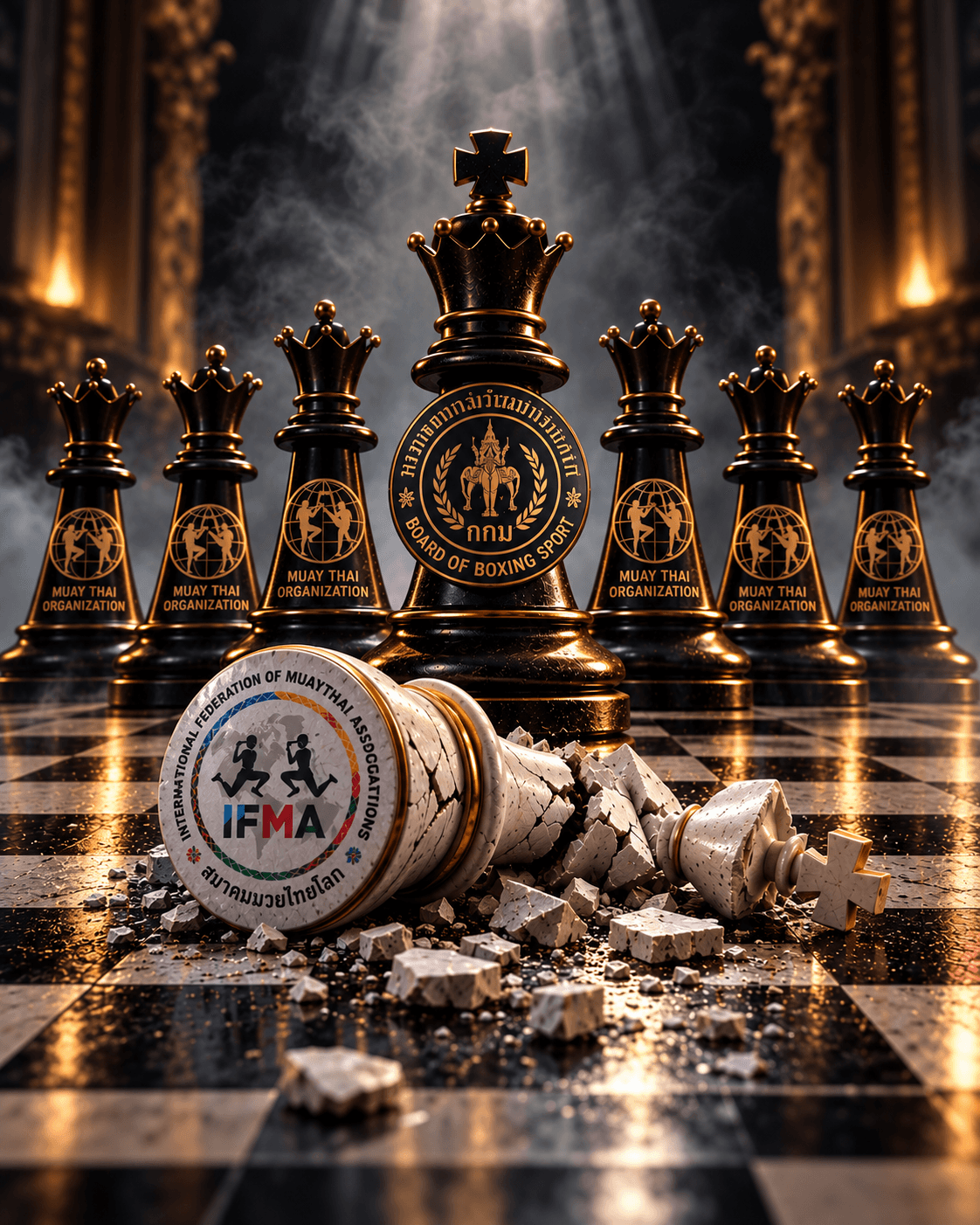
The Thai government has issued an official statement regarding the regulation and international development of Muay Thai, contesting the possibility of the International Federation of Muay Thai Associations (IFMA) exercising exclusive authority over the sport on a global scale.
The document, dated September 30, 2026, was sent to IFMA President Dr. Sakchye Tapsuwan by the Ministry of Tourism and Sports of Thailand and was subsequently published on the official Facebook page of the Office of the Boxing Committee, an entity linked to the Sports Authority of Thailand (SAT).
In the communication, the ministry states that Thai legislation does not grant any organization exclusive authority to control, manage, or regulate all activities related to Muay Thai.
This statement represents a significant institutional position amid the disputes involving the IFMA, international federations, and organizations responsible for professional competitions, commercial events, and cultural promotion of the Thai martial art.
While acknowledging the importance of the IFMA in the development of amateur Muay Thai and its connection to the Olympic Movement, the government argues that this role should not prevent other organizations from promoting the sport internationally.
Thai Government Asserts IFMA Lacks Exclusive Authority Over Muay Thai
One of the main points of the document is the assertion that no entity has legal exclusivity to manage all manifestations of Muay Thai.
According to the Ministry of Tourism and Sports, the Boxing Law of Thailand, enacted in 1999, establishes specific competencies for the Office of the Boxing Committee, the governmental body responsible for regulating and supervising the sport in the country.
This institution, subordinate to the Sports Authority of Thailand, has responsibilities related to the preservation, promotion, development, certification, and regulation of Muay Thai.
The document emphasizes that these responsibilities include implementing public policies and promoting the martial art internationally, which is considered a fundamental part of Thailand's cultural heritage.
The government also claims legitimacy to cooperate with public, private, and sports organizations from different countries, provided these activities comply with applicable laws.
In this context, Thailand maintains that the IFMA should operate within the limits of its responsibilities, without interfering in professional, commercial, or cultural activities conducted by other entities.
Letters Sent by IFMA Allegedly Caused International Conflicts
According to the official document, the IFMA sent correspondence to various national and international sports organizations seeking recognition of its authority as the main entity responsible for the global regulation of Muay Thai.
The ministry states that these initiatives have caused confusion regarding the legal competencies of the different organizations involved in the sport.
According to the Thai position, interpretations of the IFMA's authority have also created difficulties for professionals and entities involved in organizing international activities and competitions.
The letter mentions seven professional categories recognized by Thai legislation: fighters, trainers, referees, boxing promoters, training camp managers, arena owners, and competition organizers.
These professionals, along with independent organizations, have faced obstacles in developing certain activities abroad.
The document also cites correspondence sent by the French Federation of Kickboxing, Muay Thai, and Associated Disciplines (FFKMDA) and USA Muaythai, both linked to the IFMA.
These entities expressed concerns about international promotion initiatives for Muay Thai conducted without the participation of organizations recognized by the international federation.
Among the arguments presented was the fear that these activities could harm Muay Thai's position in the international sports arena and efforts for its inclusion in the Olympic Games program.
The Thai government, however, argues that cultural, educational, and commercial programs should not be confused with sports competitions conducted within the Olympic Movement framework.
Document Mentions Allegations of Possible Monopolistic Practices in Europe
Another highlight of the official communication involves allegations presented in Athens, Greece, related to the international activities of the IFMA and the Pan-Hellenic Muay Thai Federation (PMF).
According to the ministry, a communication received in July 2026 reported a formal complaint alleging possible violations of competition law and monopolistic practices in the sector.
The accusations mentioned in the document include alleged abuse of dominant market position, attempts to control competition organization, broadcasting rights, sponsorship contracts, and the exclusion of independent promoters.
The Thai government states that the communication was presented in the context of European whistleblower protection mechanisms.
However, the allegations do not represent a judicial conclusion regarding the conduct of the cited organizations.
The document provided does not present a definitive decision from a judicial or competition authority that proves the alleged irregularities.

Fairtex Slim Cut Muay Thai Boxing Shorts Black Volcano
Fairtex Muay Thai Shorts are made from high-quality satin for durability and a sleek, professional look. The shorts are available in a range of sizes to fit a variety of body types. These shorts feature a traditional Muay Thai design with intricate embroidery and detailing.
Nonetheless, the inclusion of these allegations in an official statement from the Thai government highlights the extent of the disputes surrounding the international administration of Muay Thai.
Government Differentiates Olympic Muay Thai from Professional Muay Thai
The Ministry of Tourism and Sports also emphasizes fundamental differences between amateur Muay Thai, represented by the IFMA in the Olympic Movement, and professional Muay Thai.
According to the government, the two segments have distinct objectives, competition systems, regulations, equipment, and economic models.
Amateur Muay Thai associated with the Olympic structure uses specific regulations, including protective equipment requirements in certain categories.
In contrast, professional Muay Thai is linked to an international sports entertainment industry, broadcasting, sponsorships, and major competitions.
The document cites organizations and events such as ONE Championship, Thai Fight, Rajadamnern World Series (RWS), and global events from various organizations.
These competitions follow their own organizational models and generate revenue from broadcasting rights, sponsorships, advertising, and other commercial activities.
The government argues that these structures should not be automatically subjected to the same administrative requirements as amateur competitions linked to the Olympic Movement.
For Thai authorities, it is essential to respect the differences between sports, amateur, professional, and commercial activities to allow for the development of all segments of the sport.
Cultural Muay Thai Projects Also at the Center of Controversy
The official position also addresses disputes involving initiatives by the Thai government aimed at the international promotion of Muay Thai.
Among the programs mentioned are the Muaythai Master Classes, which promote educational activities with experts in the sport, and the Standard Muaythai Gym (SMG), a certification system for training centers.
These projects are part of Thailand's strategy to strengthen the international presence of Muay Thai, promote its culture, encourage sports tourism, and stimulate the national economy.
According to the ministry, these initiatives do not involve conducting sports competitions and have different objectives from those related to organizing international championships.
The activities are developed in cooperation with Thai embassies and local institutions, respecting the laws of the participating countries.
The government argues that the cultural promotion of Muay Thai should remain open to participation from different organizations, without relying solely on the authorization of an international sports federation.
Thailand Acknowledges IFMA's Olympic Role but Advocates Limits to Its Authority
Despite the criticisms presented in the document, the Ministry of Tourism and Sports recognizes the IFMA's contribution to the promotion and international development of amateur Muay Thai.
The federation is recognized by the International Olympic Committee (IOC) and plays an important role in efforts to increase the sport's presence in the Olympic Movement.
The document mentions that the IFMA has representatives in 157 countries and operates through affiliated national federations.
However, the Thai government maintains that Olympic recognition does not equate to having exclusive authority over all activities related to Muay Thai.
The statement also highlights that the IFMA is not registered under the Thai Sports Authority Act of 2015, emphasizing the difference between its status as an international sports organization and the competencies established by Thai legislation.
For the ministry, the sustainable development of Muay Thai depends on cooperation among entities, respecting each organization's responsibilities.
The position advocates that no institution should impose undue restrictions on the activities of other entities that promote the sport legitimately.
Official Publication Reinforces Thai Government's Position
The release of the document on the official page of the Office of the Boxing Committee of Thailand, linked to the Sports Authority of Thailand (SAT), reinforces the institutional nature of the statement.
The publication presents the content as the official position of the Ministry of Tourism and Sports regarding governance, promotion, and international development of the Muay Thai industry.
The released text states that initiatives attributed to the IFMA have caused misunderstandings about the authority of different organizations, as well as affecting professionals and promoters of international activities.
The statement also reaffirms the Thai government's competence to develop public policies aimed at preserving and promoting the sport abroad.
By making this position public, Thai authorities elevate the discussion beyond correspondence between federations, broadening the debate on the role of institutions involved in the global development of Muay Thai.
Positioning May Influence the Future of International Muay Thai
The Thai government's statement highlights a discussion involving the future of the international administration of Muay Thai, particularly the relationships between amateur organizations, professional entities, and institutions responsible for its cultural promotion.
Thailand, the birthplace of the sport, considers Muay Thai a fundamental part of its cultural heritage and sports industry.
By asserting that no organization has exclusive authority over all activities related to the martial art, the government reinforces its intention to preserve space for different models of international development and promotion.
The document does not revoke the IFMA's recognition in the Olympic Movement nor does it exclude it from international sports activities.
However, it establishes the official position that the federation must respect the limits of its responsibilities and avoid interfering in activities conducted by other organizations.
The communication also advocates principles of transparency, equal opportunities, institutional cooperation, and respect for national laws.
For the international Muay Thai community, this position represents a significant development in the debate over the regulation of the sport.
The discussion involves not only federations and leaders but also fighters, trainers, gym owners, event promoters, and other organizations directly participating in the international expansion of the sport.
The position presented by the Thai government is clear: the development of Muay Thai should occur through cooperation among different sectors, without exclusive concentration of authority and with respect for sports, professional, commercial, and cultural activities.
Source: Ministry of Tourism and Sports of Thailand — official document dated September 30, 2026, published on the page of the Office of the Boxing Committee of Thailand, an entity linked to the Sports Authority of Thailand (SAT), on Facebook.
Muay Thai Expert — independent editorial. Affiliate links on product pages are disclosed.